

What Is a Hammam? A Complete Beginner’s Guide to the Traditional Bathing Ritual

Thousands of years before the modern spa industry packaged relaxation into a sixty-minute treatment, communities across the Middle East, North Africa, and Central Asia had already perfected it. They called it the hammam. A visitor stepping into one of Istanbul’s oldest bathhouses for the first time will feel the heat long before they reach the marble slab at its center. The steam hits them first. Then the silence, broken only by water running across stone. Then, slowly, every knot of tension in their body begins to loosen. What they are experiencing is not a wellness trend. It is one of the oldest continuous bathing traditions in human history, practiced in essentially the same form for more than a thousand years.
The Origins: From Roman Thermae to Ottoman Institution
The hammam did not appear fully formed. It evolved from a layered sequence of cultural inheritances stretching back to ancient Rome. The tradition of communal bathing stretches back thousands of years. In ancient Rome, grand bathhouses were central to both social and daily life, designed for hygiene, relaxation, and conversation. When the Roman Empire declined and the Byzantine Empire rose in its place, those bathing habits continued in modified form across the eastern Mediterranean.
The decisive transformation came with the arrival of Islam. Muslims across regions invested heavily in construction, and some of the surviving hammams are preserved as architectural marvels of the Ottoman dynasty. Islamic teachings placed cleanliness at the center of religious practice. Prof. Ebru Ibish stresses the connection to Islam’s teaching that “cleanliness is half of faith.” That principle turned the bathhouse from a place of leisure into a place of obligation, which meant hammams became essential civic infrastructure rather than optional luxury.
With the arrival of the Seljuk Turks in Anatolia, a new cultural layer was added. The Seljuks brought with them bathing customs from Central Asia and Persia, which they skillfully fused with the existing Roman and Byzantine traditions. Crucially, they integrated the principles of Islamic hygiene and purification. The result was an institution that served religious, social, and public health functions simultaneously.
Following the conquest of Constantinople by Sultan Mehmed II in 1453, one of his first acts was to commission the construction of the city’s first Ottoman hammams in 1454, symbolizing the city’s rebirth as a new Islamic capital. That symbolic act confirmed the hammam’s place not just in daily life, but in the meaning a culture assigned to its cities. A city without a hammam was not yet fully built.
What a Hammam Actually Is: The Space and Its Logic
A hammam is a communal steam bathhouse designed around a sequence of rooms at different temperatures. The logic behind the design is physical progression. The body moves gradually from heat to greater heat, allowing pores to open, muscles to soften, and the mind to release whatever it carried through the door.
Traditional Turkish baths consist of three interconnecting rooms: a camekan, a sıcaklık, and a soğukluk. Each room serves a specific purpose in the bathing sequence.
The camekan is the entrance hall. Bathers receive a pestemal here, which is a traditional woven cotton towel worn around the body. They also receive wooden slippers called takunya to protect their feet on the wet stone floors. The camekan functions as a psychological threshold, the point where the outside world and its pressures officially stay behind.
The soğukluk is the cool room, typically the first room entered after the camekan. Its lower temperature allows the body to begin adjusting before moving deeper into the heat. Bathers rest here after the full ritual as well, allowing their body temperature to return to normal gradually. Some hammams serve tea or water in the soğukluk as part of the cooling-down process.
The sıcaklık, or hot room, is the heart of the hammam. The hammam reached its architectural and cultural zenith under the Ottoman Empire. The Ottoman bathing ritual was a holistic wellness treatment long before the term became trendy. The sequence of steaming, vigorous massage, and exfoliation was designed to boost circulation, ease muscle tension, cleanse the skin, and induce a state of deep mental relaxation. At the center of the sıcaklık sits the göbek taşı, a large heated marble slab also known as the navel stone. Bathers lie on this slab while the combination of radiant heat from below and steam from above prepares their skin for what follows.
The Step-by-Step Ritual: What Happens During a Hammam Visit
Understanding the sequence before arriving removes the anxiety that stops many first-time visitors from fully surrendering to the experience. Each step builds on the one before it.
Arrival and preparation.
A staff member greets new visitors and guides them to the changing area. Most hammams provide the pestemal and slippers. Most hammams provide towels or wraps that you wear around your waist or body. Some prefer to wear swimsuits underneath for modesty. It is best to check with the specific hammam about their dress code. Eating a heavy meal before arrival is not recommended, as the heat intensifies digestion and can cause discomfort.
The steam phase.
Bathers enter the hot room and lie on the heated marble slab. The first step in the hammam experience is entering a warm or hot steam room. The humidity and heat begin to open your pores and soften your skin. This stage is a fundamental part of the hammam, as it prepares your body for deep exfoliation. It’s a time to relax, breathe deeply, and begin to let go of physical and mental tension. Most practitioners recommend spending at least ten to fifteen minutes in the steam before exfoliation begins.
The kese scrub.
A trained attendant called a tellak in Turkish hammams performs the exfoliation. Using a traditional kese mitt, they exfoliate your entire body, removing dead skin and stimulating circulation. The kese is a coarse woven mitt that removes layers of dead skin cells. First-time visitors often find the amount of skin that rolls off their body both alarming and satisfying in equal measure. The scrub stimulates blood flow to the skin’s surface and leaves the skin noticeably smoother.
The foam massage.
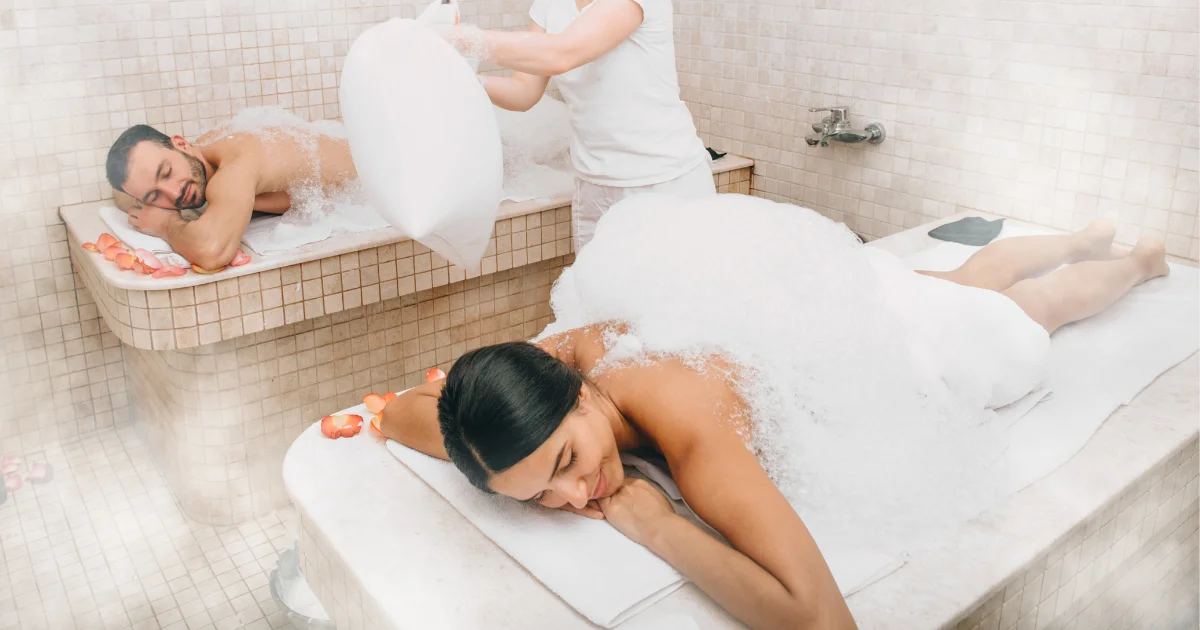
After the kese scrub, the attendant produces a large lathered cloth filled with olive oil soap and works it across the body in rhythmic strokes. The resulting foam covers the bather completely. This stage combines the cleansing benefit of the soap with a physical massage that addresses muscle tension and promotes circulation. The sensation, particularly for first-time visitors, is unlike anything produced by a conventional shower or bath.
The rinse.
After the foam massage, the bather is rinsed with warm water to cleanse the body of all soap and remaining impurities. This part of the hammam is both soothing and refreshing. Some hammams follow the warm rinse with a cooler rinse to close the pores and stimulate the skin’s surface.
Rest and recovery.
Once the hammam session is over, it is important to hydrate and take a few moments to relax. The heat and exfoliation process can be detoxifying, so drinking water or herbal tea will help replenish your body. Most hammams provide a quiet rest area for this phase. Rushing back into activity immediately after the ritual misses one of its most valuable stages.
Turkish Hammam vs. Moroccan Hammam: Understanding the Differences
The word hammam covers several distinct regional traditions. The two most widely encountered outside their countries of origin are the Turkish hammam and the Moroccan hammam. Both share the same ancient roots. Their products, architecture, and social meanings, however, differ in ways that matter to anyone choosing between them.
| Feature | Turkish Hammam | Moroccan Hammam |
|---|---|---|
| Architecture | Grand domed ceilings, marble floors, ornate tilework, central göbek taşı | Lower ceilings, tadelakt lime plaster walls, intimate scale, low benches |
| Primary products | Olive oil soap, kese exfoliation mitt, pestemal towel | Savon beldi (black olive soap), kessa mitt, rhassoul clay from the Atlas Mountains |
| Heat style | High steam, very hot | Warm and humid, less intense steam |
| Atmosphere | Often social and lively; communal bathing encouraged | More private and individual; focused on personal cleansing |
| Typical session length | 45 minutes to 90 minutes | 60 minutes to 2 hours |
| Focus | Steam bathing, foam massage, muscle relaxation | Deep exfoliation, natural skincare, hydration |
Moroccan hammams
Typically lower-ceilinged and more intimate than their Ottoman counterparts. The walls are finished in tadelakt, a polished lime plaster unique to Morocco that is naturally waterproof and antibacterial. The Moroccan ritual centers on savon beldi, a traditional black soap made from olive paste and olive oil. According to Tattva Spa Wellness, other products like rhassoul clay and argan oil are also used for different stages of the ritual.
The Turkish hammam is typically more extravagant, with a larger and more ornate interior, and often features things like marble floors and walls. They are usually found in larger cities. Moroccan hammams are typically smaller, more traditional, and cosy and are often found in smaller towns and rural areas.
The social dimension also separates them. The Turkish hammam traditionally has a social aspect, and it is common for people to visit the hammam with friends or family. The Moroccan hammam experience is often seen as a more private and individual ritual for personal wellbeing.
The Cultural Role of the Hammam Beyond Bathing
Reducing the hammam to a spa experience misses much of its historical significance. For the communities that built and sustained this tradition across centuries, the hammam functioned as a social equalizer, a news exchange, a community gathering point, and a space for marking life’s most important transitions.
Before important life events such as weddings, childbirth, or religious holidays, people would visit the hammam to cleanse themselves in preparation for these significant milestones. The act of bathing in the hammam symbolized purification and the beginning of a new chapter.
The bridal hammam, or gelin hamamı, was a special pre-wedding tradition where the bride, accompanied by her female friends and relatives, would visit the hammam to cleanse herself in preparation for her new life. This was often a joyful and festive event, filled with songs, laughter, and a sense of community.
Beyond that, important discussions, such as business deals, political matters, and even marriage negotiations, often took place in the hammam’s serene atmosphere. The combination of heat, relaxation, and a neutral setting created conditions where people spoke more openly than they might in formal settings. The hammam was, in this sense, a place where society’s business got done alongside its bathing.
For women in particular, the hammam held specific social importance. In many traditional communities, it represented one of the few spaces outside the home where women gathered independently, shared information, and maintained social bonds across families and neighborhoods. That function was not incidental. It was one of the reasons hammams remained central to community life for so many centuries.
The Health Benefits: What the Research and Tradition Both Support
The hammam’s health claims fall into two categories: those supported by established physiological principles and those that tradition has always endorsed. Both deserve honest treatment.
Skin health benefits from exfoliation, which removes dead cells while steam opens pores and aids deep cleansing. Muscle relaxation and pain relief come from the warmth, which soothes aches caused by tension and inflammation. Stress reduction occurs because the calming environment helps lower cortisol levels and promotes mental clarity. Respiratory benefits come from steam inhalation, which can alleviate congestion or sinus discomfort.
Regular visits can improve sleep, reduce stress, support muscle recovery, and boost immunity. The combination of heat, exfoliation, and massage encourages detoxification and circulation, offering a natural way to recharge both body and mind.
The circulatory effects are among the most physiologically grounded claims. Sustained heat causes blood vessels near the skin’s surface to dilate. That dilation increases blood flow and temporarily reduces blood pressure. The cool rinse at the end of the ritual causes the vessels to constrict again, a process sometimes described as vascular exercise. Repeating that cycle of dilation and constriction during a hammam session produces a measurable cardiovascular effect.
The skin benefits of regular exfoliation are equally well established. Removing the outer layer of dead skin cells allows the skin beneath to breathe more efficiently, absorb moisture more effectively, and regenerate more quickly. Regular hammam visitors typically report noticeable changes in skin texture within a few sessions.
Individuals with cardiovascular conditions, low blood pressure, pregnancy, or skin conditions should consult a healthcare provider before visiting a hammam. The heat levels in a traditional Turkish hammam are significant, and anyone whose health may be compromised by sustained high temperatures needs medical guidance before exposure.
What to Bring and How to Prepare for Your First Visit
Preparation turns a first hammam visit from a slightly anxious experience into a fully relaxing one. Most traditional hammams provide everything needed for the ritual itself. What visitors bring from home determines how comfortable the transitions between spaces feel.
Bring flip-flops or sandals for navigating wet stone floors. Most hammams provide slippers, but having your own ensures a comfortable fit. A change of clothes, worn loosely, makes the post-hammam rest feel complete rather than rushed. A hair tie proves useful if the steam and foam massage would otherwise leave hair difficult to manage.
Arrive well hydrated. The heat and sweating during a hammam session produce significant fluid loss. Drinking water before arrival and during the rest phase prevents headaches and fatigue afterward. Avoid alcohol before a hammam visit, as the combination of heat and alcohol dehydrates the body rapidly and can cause dizziness.
Arrive without expectations about speed. A hammam visit done properly takes time. The steam phase alone requires patience from visitors accustomed to quick showers. The rest phase afterward requires willingness to sit still without reaching for a phone. That unhurried quality is not a side effect of the hammam tradition. It is the point of it.
Tipping attendants is customary. The tellak, the attendant who performs the scrub and massage, provides skilled physical labor that forms the core of the experience. A tip of between 15 and 20 percent of the service cost reflects the tradition of the hammam community and supports the professionals who maintain it.
The Hammam in the Modern World
The hammam tradition survived the twentieth century’s transformation of public life in ways that many comparable institutions did not. Municipal swimming pools, home showers, and eventually private bathrooms removed the functional necessity that once made the hammam indispensable. Yet the hammam survived because it offered something no home bathroom could replicate: the combination of heat, skilled touch, and communal space.
Today, the Turkish bath continues to attract visitors from around the world, offering a unique and rejuvenating experience that combines relaxation, wellness, and cultural heritage. Istanbul alone maintains dozens of active historical hammams alongside hundreds of modern spa interpretations. Marrakesh, Fez, and other Moroccan cities integrate the hammam into daily neighborhood life, where locals still visit weekly rather than as a special occasion.
Outside their countries of origin, hammam-inspired spas have appeared across Europe, North America, and Asia. London, Paris, and New York all maintain hammam experiences designed for visitors unfamiliar with the original tradition. These modern adaptations vary in their fidelity to historical practice. Some maintain the three-room architectural structure, the göbek taşı, and the kese scrub with close attention to tradition. Others borrow the name and the steam while stripping away the ritual sequence that gives the hammam its distinctive quality.
The distinction matters to first-time visitors because the experience of a carefully maintained traditional hammam differs fundamentally from a steam room with a foam massage offered as an add-on. The former rewards patience and willingness to surrender to a process developed over centuries. The latter delivers relaxation on a schedule. Both have value. Only one is a hammam in the full historical sense.
Frequently Asked Questions
What is a hammam and how is it different from a sauna?
A hammam is a steam-based communal bathhouse tradition rooted in Islamic and Ottoman culture. It combines wet heat, manual exfoliation with a kese mitt, and a foam massage, typically administered by a trained attendant. A sauna uses dry heat and does not include the exfoliation or massage components of the hammam ritual. The hammam also carries a cultural and social dimension rooted in centuries of community practice that the modern sauna does not share.
What should a first-time visitor wear to a hammam?
Most hammams provide a pestemal, a traditional woven cotton towel, along with slippers for navigating wet floors. According to guidance from Felicity Hammam, some visitors prefer to wear a swimsuit underneath the pestemal for modesty. Checking the specific hammam’s dress code before arrival ensures a comfortable experience. Swimwear without foam or padding is the practical choice if the hammam requires it.
How long does a typical hammam session take?
A traditional Turkish hammam session runs between 45 minutes and 90 minutes from entry to the end of the rest phase, according to multiple hammam sources. A Moroccan hammam session typically runs between 60 minutes and 2 hours due to the extended exfoliation and clay mask phases. Neither estimate includes the time spent resting and rehydrating after the main ritual, which most practitioners consider an essential part of the experience.
Is a hammam suitable for everyone?
Most healthy adults can enjoy a hammam safely. According to Felicity Hammam’s guidance, individuals who are pregnant should consult a healthcare provider before visiting due to the sustained heat exposure. Those with cardiovascular conditions, low blood pressure, skin conditions, or recent surgery should also seek medical advice before a hammam visit. Staying hydrated before, during, and after the session reduces the most common side effects, which include light-headedness and mild fatigue.
Book your treatment at Hammam Spa London